Zeeday Experiment
A self-built creative playground — generative animations, original music experiments, and mini-games wrapped in a retro terminal aesthetic.
- Role
- Designer & Developer
- Tools
- Vanilla JS, HTML/CSS, Canvas API
- Scope
- Concept, visual design, creative direction, development
Experiment
A retro creative hub built purely for the joy of making.
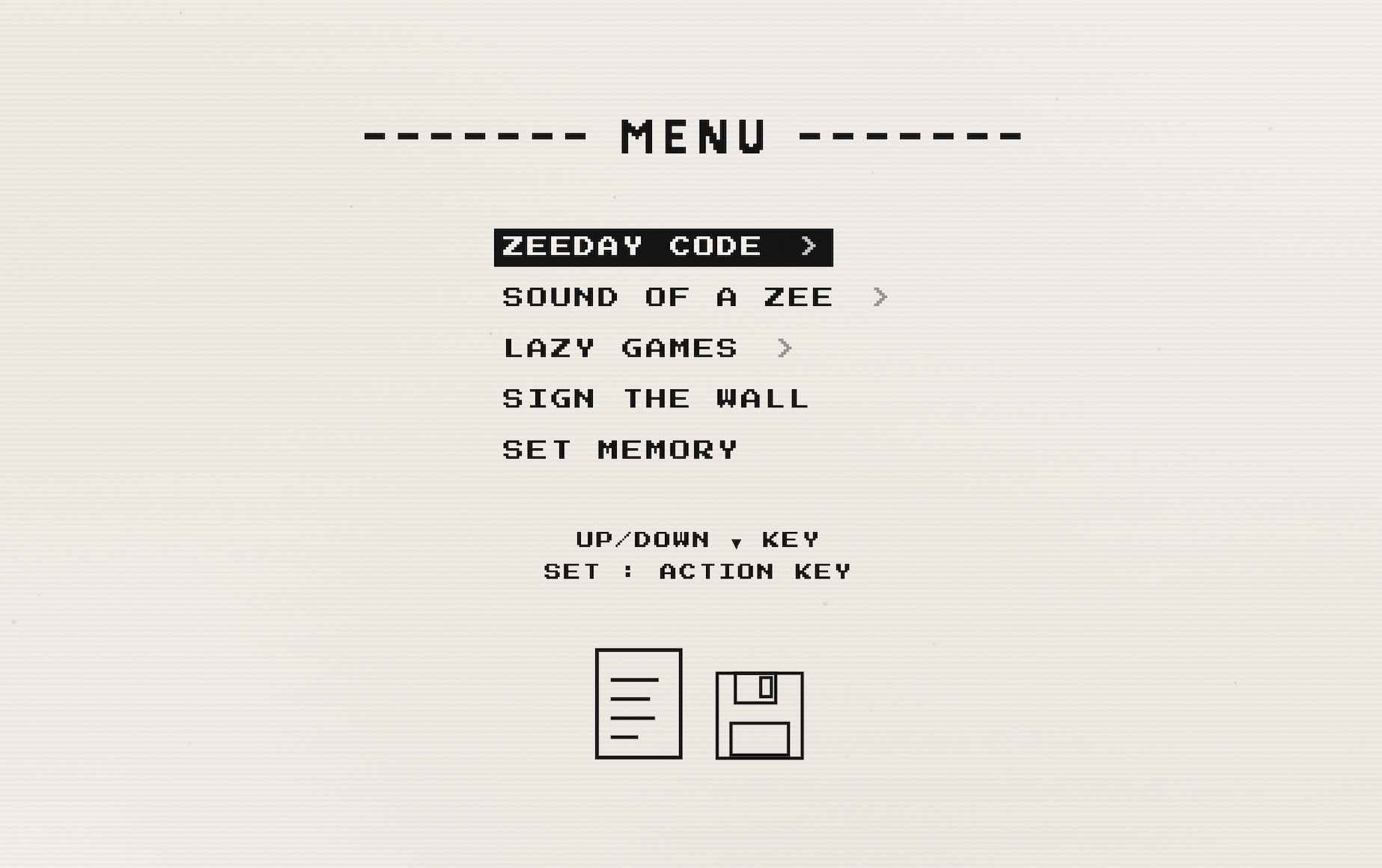
Zeeday is a self-built playground that lives outside client work. It has three rooms: generative code animations you can watch run, original music experiments you can play through, and lightweight browser games. The whole thing is wrapped in a lo-fi terminal aesthetic — keyboard-driven, text-based menus, no UI framework, just code.
Three rooms
One site, three very different things to explore.
Zeeday Code
Five generative animations — Flow Field, Magnetic Grid, Shape Morph, Ink Fade, and Elastic Play — built with Canvas API and vanilla JS.
Sound of a Zee
Eight original audio experiments ranging from chiptune and lo-fi beats to acid bass and ambient waves, playable from the terminal menu.
Lazy Games
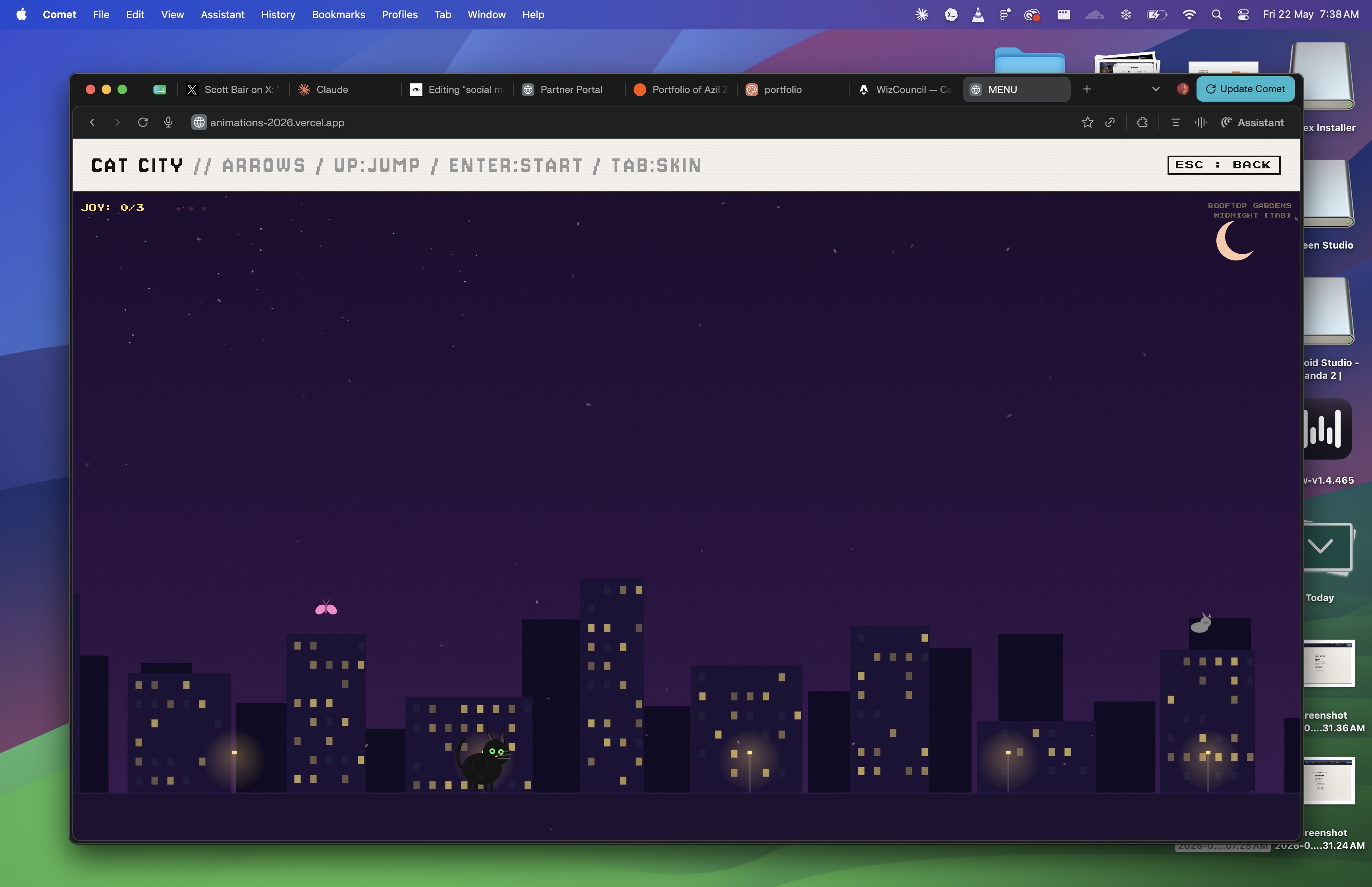
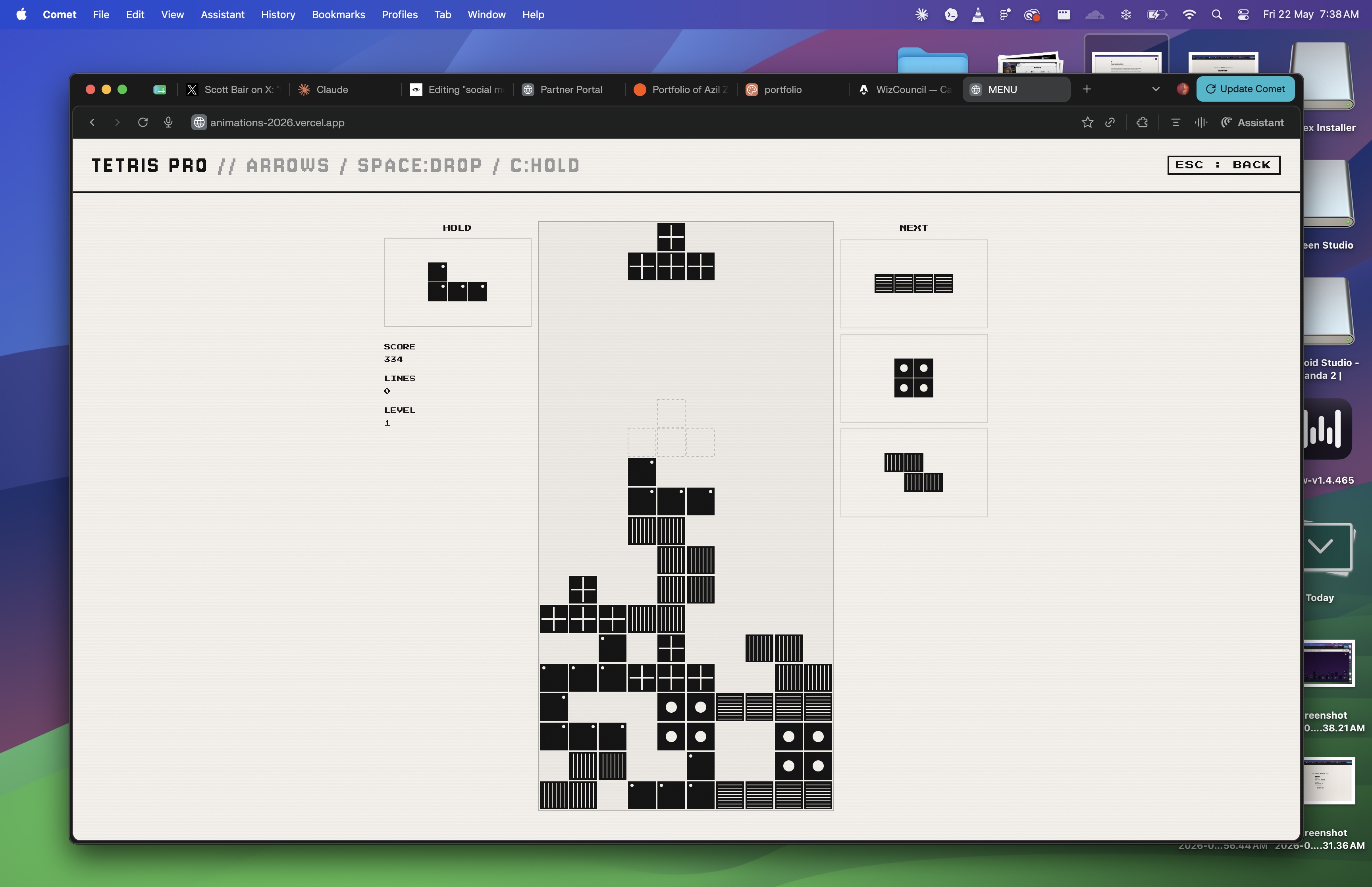
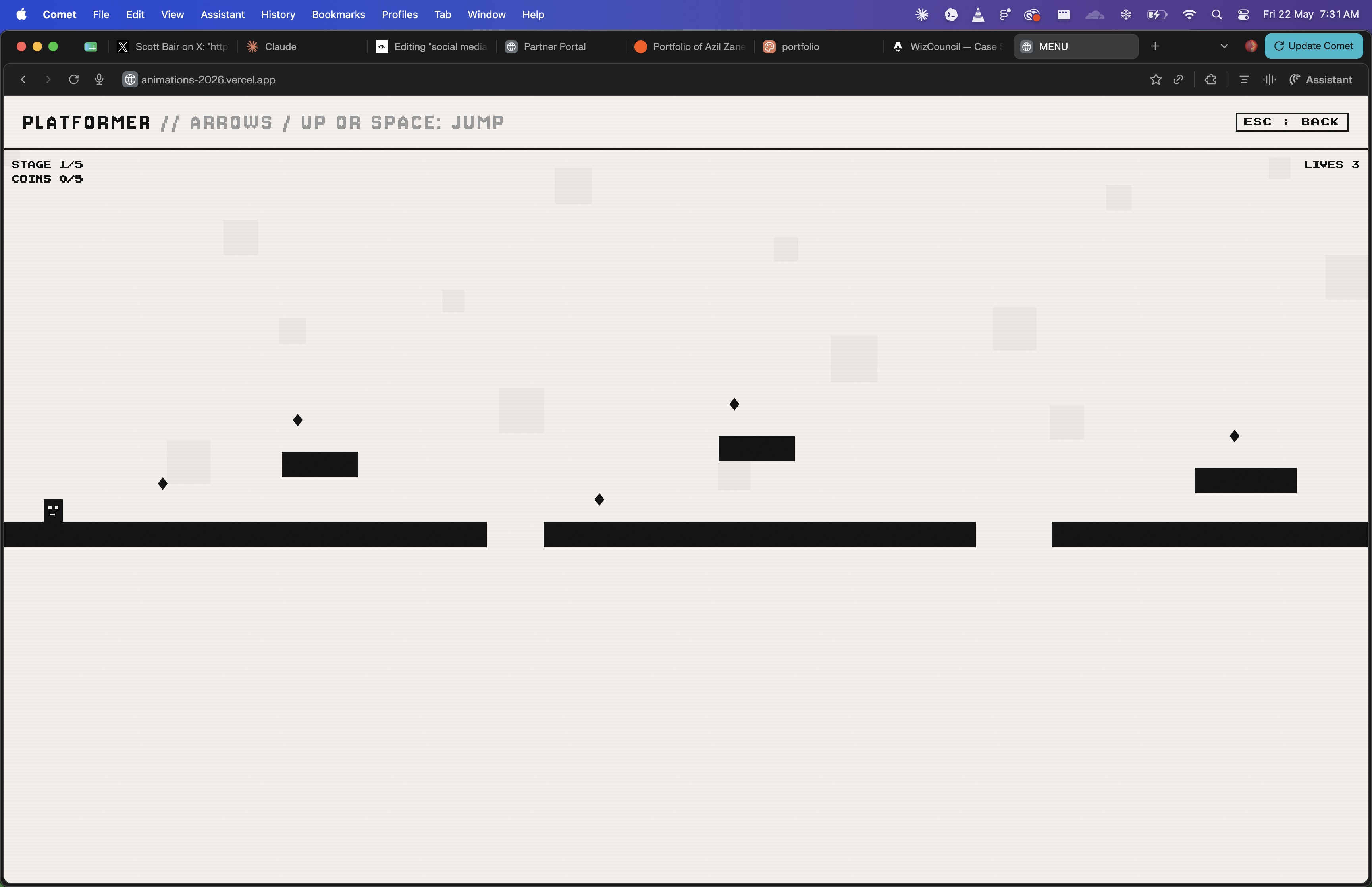
Six browser games: Snake, Tetris, a Raycaster 3D engine, a Platformer, and two Cat City builds — all keyboard-controlled and zero-install.
Design decisions
Why retro terminal?
No mouse required
Keyboard-only navigation made the interface feel intentional — every action has a clear key, which forces the experience to be learnable rather than just discoverable.
Text over chrome
ASCII structure and monospace menus strip the UI down to content. When the visual output IS the product (generative art, audio), the shell around it should disappear.
Constraint as creative direction
Committing to the lo-fi aesthetic before building anything made every decision faster. No gradient debates. No layout frameworks. Just type, space, and interaction.